
Ear infections are one of the most common health problems in dogs. Many dogs experience at least one ear infection during their lifetime, especially breeds with floppy ears or dogs that swim frequently.
While ear infections may seem minor at first, they can quickly become painful and serious if left untreated. Early detection and proper care are essential for protecting your dog’s comfort and health.
In this guide, you will learn how to recognize the symptoms of a dog ear infection, understand the causes, and discover the best ways to treat and prevent future infections.
What Is a Dog Ear Infection?
A dog ear infection occurs when bacteria, yeast, or other microorganisms grow inside the ear canal. This often happens when moisture, wax, or debris becomes trapped inside the ear.
The warm and moist environment inside a dog’s ear can allow bacteria and yeast to grow quickly, which leads to irritation, inflammation, and infection.
Dog ear infections typically affect the outer ear canal, but in severe cases they can spread deeper into the middle or inner ear.
Common Symptoms of Dog Ear Infections
Recognizing the symptoms early can help prevent the infection from becoming more serious.
Some of the most common signs include frequent head shaking. Dogs with ear infections often shake their heads in an attempt to relieve irritation.
Scratching at the ears is another common symptom. Dogs may paw at their ears repeatedly because of itching or discomfort.
A strong or unpleasant odor coming from the ear is often one of the earliest warning signs.
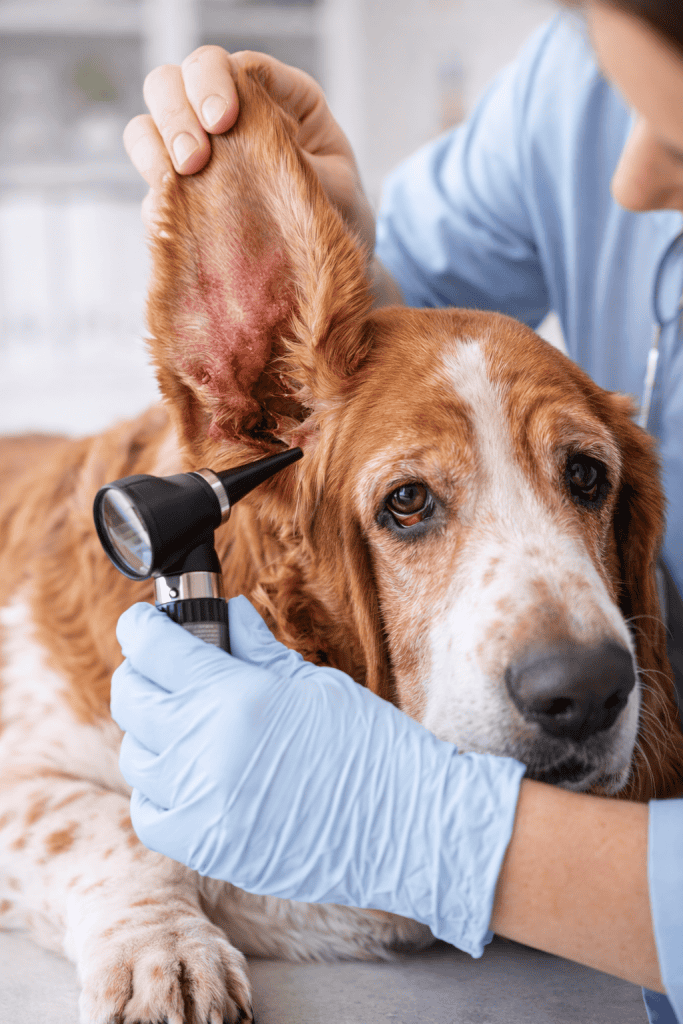
Redness or swelling inside the ear can indicate inflammation caused by infection.
You may also notice dark brown or yellow discharge inside the ear canal.
Some dogs may become sensitive when their ears are touched and may show signs of pain.
In more severe cases, dogs may lose balance or tilt their head to one side.
What Causes Ear Infections in Dogs?
There are several factors that can lead to ear infections in dogs.
Excess moisture is one of the most common causes. Dogs that swim often or get water trapped in their ears are more likely to develop infections.
Wax buildup can also create an environment where bacteria and yeast thrive.
Allergies are another major factor. Dogs with food allergies or environmental allergies frequently develop ear problems.
Ear mites are small parasites that live inside the ear canal and can cause irritation and infection.
Poor ear hygiene may allow debris and wax to accumulate over time.
Certain dog breeds are also genetically prone to ear infections.
Breeds such as Cocker Spaniels, Basset Hounds, and Golden Retrievers often experience ear problems because their long ears trap moisture and reduce airflow.
How Veterinarians Diagnose Ear Infections
If you suspect your dog has an ear infection, a veterinarian can perform a proper diagnosis.
The vet will typically examine the ear canal using an instrument called an otoscope. This allows them to see inside the ear and check for inflammation, debris, or damage.
A sample of ear discharge may also be examined under a microscope to determine whether bacteria, yeast, or mites are causing the infection.
Proper diagnosis helps ensure your dog receives the most effective treatment.
Treatment Options for Dog Ear Infections
Treatment depends on the severity and cause of the infection.
In many cases, veterinarians prescribe medicated ear drops that contain antibiotics, antifungal medication, or anti-inflammatory ingredients.
The ear will often be cleaned thoroughly before medication is applied.
For dogs with severe infections, oral medications may also be required.
It is important to follow the veterinarian’s instructions carefully and complete the entire treatment course even if symptoms improve.
Stopping treatment too early can allow the infection to return.
Can Dog Ear Infections Be Treated at Home?
Mild ear irritation may sometimes be managed with regular cleaning and a gentle ear solution.
However, true ear infections should always be evaluated by a veterinarian.
Using the wrong treatment can worsen the infection or delay proper care.
If your dog shows signs of pain, strong odor, swelling, or discharge, veterinary treatment is recommended.
How to Prevent Ear Infections in Dogs
Preventing ear infections is often easier than treating them.
Regular ear checks can help you detect problems early before they become severe.
Cleaning your dog’s ears periodically can remove wax and debris that may lead to infection.
Dogs that swim frequently should have their ears dried carefully after swimming or bathing.
Managing allergies can also reduce the risk of recurring ear infections.
Keeping the ears clean and dry is one of the best ways to maintain ear health.
When to See a Veterinarian
While some ear irritation may be minor, certain symptoms require professional attention.
Contact a veterinarian if your dog has persistent head shaking, strong odor from the ear, thick discharge, swelling, or visible pain.
Early treatment can prevent complications and help your dog recover quickly.
Final Thoughts
Dog ear infections are common but treatable when detected early. By recognizing the warning signs and maintaining proper ear hygiene, dog owners can help protect their pets from unnecessary discomfort.
Regular ear checks, proper cleaning, and veterinary care when needed will keep your dog healthy and comfortable.
Common signs include head shaking, scratching the ears, redness, strong odor, and dark discharge.
Yes. Ear infections can cause irritation, itching, and pain if left untreated.
Most ear infections require treatment. Without proper care they may worsen over time.
With proper treatment most infections improve within one to two weeks.