
Bringing home a new puppy is one of life’s most joyful moments. Those tiny paws, that puppy breath, the endless zoomies — it’s pure happiness. But along with all that cuteness comes a very important responsibility: making sure your new best friend gets properly vaccinated.
If you’re staring at your vet’s vaccination schedule feeling a little overwhelmed, don’t worry. By the end of this guide, you’ll know exactly which vaccines your puppy needs, when they need them, and why it all matters so much.
Why Does My Puppy Need Vaccinations?
When puppies are born, they receive some natural immunity through their mother’s milk (specifically the first milk, called colostrum). This maternal immunity protects them in their first weeks of life — but here’s the catch: it fades.
Between 6 and 16 weeks of age, that maternal protection drops off, leaving your puppy vulnerable to some very serious diseases. Vaccines step in to fill that gap, training your puppy’s immune system to recognize and fight dangerous viruses and bacteria before they ever encounter them.
Without vaccinations, puppies are at real risk of diseases like Parvovirus, Distemper, and Rabies — illnesses that can be fatal, even with the best veterinary care. The good news? These are all preventable with the right vaccination schedule.
Core vs. Non-Core Vaccines: What’s the Difference?
Not all vaccines are the same. They’re divided into two categories:
Core vaccines are recommended for every single puppy, regardless of lifestyle or location. These protect against diseases that are widespread, highly contagious, or potentially transmissible to humans.
Non-core vaccines are recommended based on your puppy’s specific risk factors — things like where you live, whether your dog will be boarding, or whether they’ll spend lots of time around other dogs.
Your veterinarian will help you figure out which non-core vaccines make sense for your pup’s lifestyle.
The Core Puppy Vaccines
Distemper is a serious viral illness that affects your puppy’s respiratory, gastrointestinal, and nervous systems. It spreads through airborne exposure and is often fatal. The vaccine is usually combined with several others in the “DA2PP” or “DHPP” shot.
Parvovirus is every puppy owner’s nightmare. Parvo is incredibly contagious and can survive in the environment for months. It causes severe vomiting, bloody diarrhea, and without aggressive treatment, death. The Parvo vaccine is part of the combination shot mentioned above.
Adenovirus (Hepatitis) attacks the liver and can cause serious illness. It’s included in the combination vaccine as well.
Parainfluenza is one of the contributors to kennel cough. It’s often included in the combination shot and helps protect dogs that are around other dogs.
Rabies is required by law in most places, and for good reason — it’s fatal and can spread to humans. Your puppy will get their first Rabies vaccine around 12-16 weeks, with boosters following according to local regulations.
The Recommended Puppy Vaccination Schedule
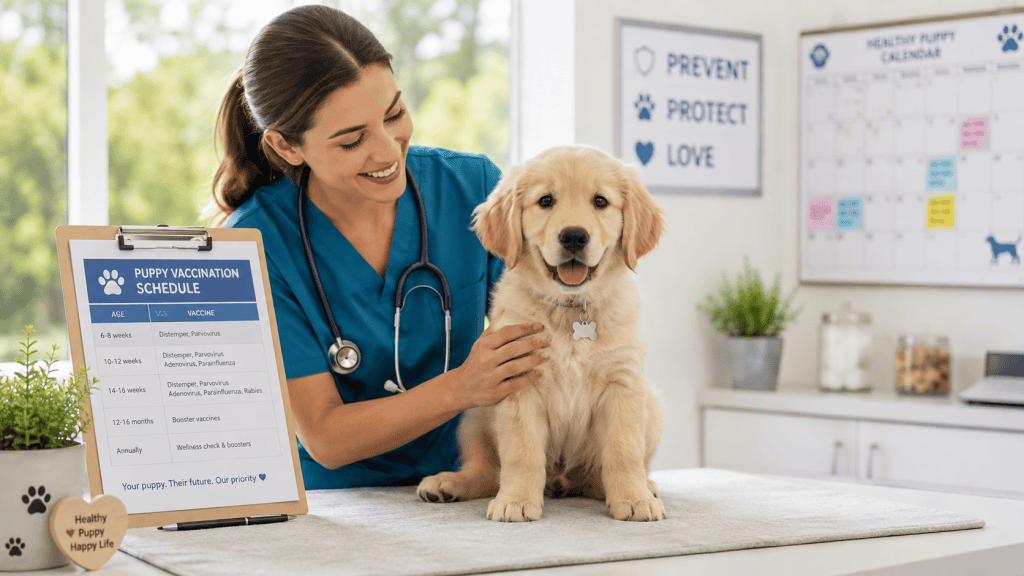
Most vets follow a schedule that looks something like this. Keep in mind that timing can vary slightly depending on your vet and your puppy’s health history.
At 6 to 8 weeks old, your puppy should receive their first DA2PP combination vaccine (Distemper, Adenovirus, Parvovirus, Parainfluenza). This is often given by the breeder or shelter before the puppy comes home.
At 10 to 12 weeks old, your puppy gets their second DA2PP booster shot. By this point, maternal immunity is starting to wane, so this timing is crucial.
At 14 to 16 weeks old, your puppy receives their third DA2PP booster, plus their first Rabies vaccine. This is often the appointment where non-core vaccines are also discussed.
At 12 to 16 months old, your now grown-up puppy gets a final booster of DA2PP and a Rabies vaccine (often the 3-year version this time). This completes the initial puppy series.
After that, your dog will need booster shots throughout their life. Some vaccines are given annually, while others (like Rabies) are given every 3 years depending on the vaccine type and local laws.
Non-Core Vaccines Worth Knowing About
Bordetella (Kennel Cough) is highly recommended for any dog that will be boarded, visit dog parks, attend doggy daycare, or have regular contact with other dogs. It’s a relatively mild illness but spreads like wildfire among groups of dogs.
Leptospirosis is a bacterial infection that can be spread through contaminated water and can actually infect humans too. If your dog spends time outdoors, near wildlife, or in rural areas, your vet will likely recommend this one.
Lyme Disease vaccine is recommended in areas where deer ticks are common. If you live in or visit tick-heavy regions, ask your vet about this.
Canine Influenza (Dog Flu) is becoming more commonly recommended, especially if your dog is regularly around other dogs.
What to Expect After Each Vaccine
Most puppies sail through their vaccinations without any issues. Some mild side effects are completely normal and typically resolve within a day or two. These can include slight soreness at the injection site, low-grade fever, decreased appetite, and mild lethargy.
Serious reactions are rare, but they do happen. Watch your puppy for signs of an allergic reaction in the 30 to 60 minutes after a vaccine — things like facial swelling, hives, vomiting, difficulty breathing, or collapse. If you notice any of these, contact your vet or an emergency animal clinic immediately.
It’s a good idea to schedule vaccinations on a day when you can stay home and keep an eye on your pup for a few hours afterward.
How Much Do Puppy Vaccinations Cost?
Costs vary depending on your location and veterinary practice, but you can generally expect to pay between $75 and $100 per visit for core vaccines, with individual vaccines ranging from $15 to $35 each. Rabies vaccines are often less expensive.
Many areas have low-cost vaccination clinics that can help make this more affordable. Your vet’s office might also offer wellness packages that bundle vaccinations with other preventive care.
Keeping Your Puppy Safe Before They’re Fully Vaccinated
Here’s a question every new puppy owner asks: “Can I take my puppy outside before they’re fully vaccinated?”
The answer is a balancing act. Socialization is critically important for puppies during their first few months — missing out on it can lead to behavioral problems later. But an unvaccinated puppy is also genuinely at risk.
The solution is smart socialization: avoid high-risk areas like dog parks, pet stores, and anywhere unknown dogs have been. Instead, puppy classes taught by trainers who require proof of vaccination, visits to the homes of dogs you know are vaccinated, and carrying your puppy in public places (so their paws don’t touch potentially contaminated ground) are all good options.
Talk to your vet about the right approach for your puppy’s specific situation and your local disease risk.
Keeping Track of Vaccines
Your vet will give you a vaccination record — keep it safe! You’ll need it for boarding facilities, doggy daycare, training classes, and sometimes even dog-friendly housing. Some apps and pet health platforms also let you store digital copies.
A Final Word
Vaccinating your puppy is one of the most loving things you can do for them. It protects not just your own dog, but the wider canine community too — including puppies and senior dogs who may be too vulnerable to be vaccinated themselves.
If you’re just getting started on your puppy journey, you might also find our guide on bringing a new puppy home really helpful. And once your puppy is fully vaccinated and ready to explore the world, don’t miss our tips on keeping your dog active and happy.
Regular vet visits go hand in hand with vaccinations — if you haven’t already, read about why regular veterinary check-ups matter so much for your dog’s long-term health.
Your puppy is counting on you — and with the right vaccination schedule, you’ll give them the best possible start in life.