
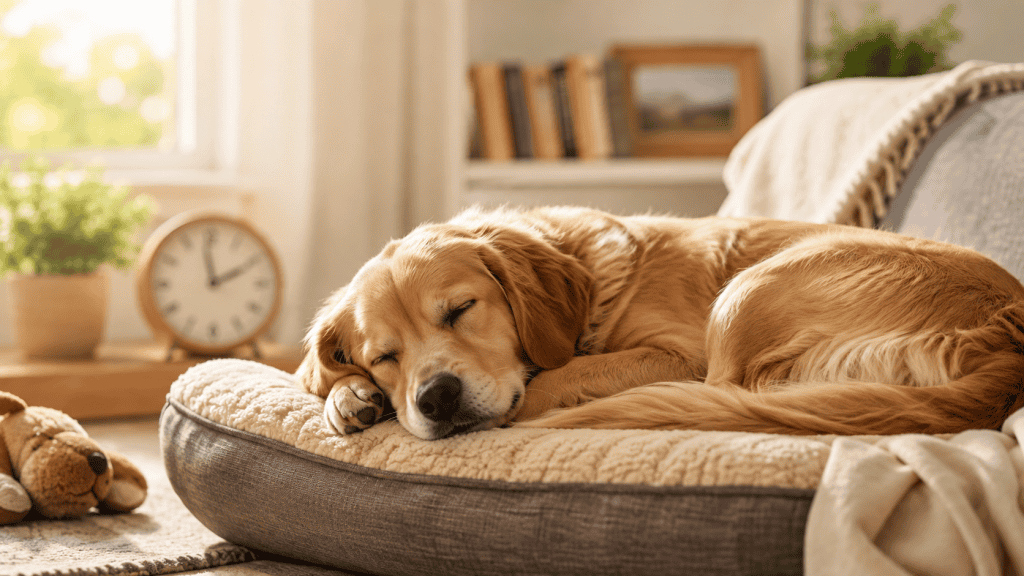
Have you ever glanced over at your dog and found them snoozing — again — and wondered if something’s wrong? Or maybe you’re on the other end of things, and your dog seems to never settle down. Either way, you’ve probably asked yourself: how much sleep do dogs actually need?
The short answer? A lot more than you do. But there’s quite a bit more to it than that, and understanding your dog’s sleep needs can actually tell you a lot about their health and happiness.
How Many Hours a Day Do Dogs Sleep?
On average, adult dogs sleep between 12 and 14 hours a day. That might sound like a dream (pun intended), but dogs just aren’t wired the same way humans are. Their sleep patterns are more fragmented — rather than one long stretch at night, dogs naturally cycle in and out of sleep throughout the day.
But here’s the thing: that “12 to 14 hours” is really just a starting point. How much your individual dog sleeps depends on a whole range of factors including their age, breed, size, activity level, and even their personality.
Sleep by Age: Puppies, Adults, and Seniors
Puppies are the ultimate sleep champions. A young puppy can sleep anywhere from 18 to 20 hours per day, and that’s completely normal. All that growing takes serious energy — their bodies are developing rapidly, and sleep is when a lot of that growth and brain development happens. If your new puppy seems to nap constantly, don’t panic. That’s exactly what they should be doing.
Adult dogs settle into that 12 to 14 hour range. How much of that is nighttime sleep versus daytime napping varies by dog, but most healthy adult dogs will sleep through the night with their owners and then nap several times throughout the day.
Senior dogs often circle back toward the higher end of the sleep spectrum, sometimes snoozing 16 to 18 hours a day. As dogs age, they tend to tire more easily, and sleep becomes more important for physical recovery. You might also notice your older dog being more stiff when they first wake up — just like people get a little creaky with age.
Do Bigger Dogs Sleep More?
Yes, actually! Larger breeds tend to sleep more than smaller ones. Giant breeds like Great Danes, Mastiffs, and Saint Bernards are notorious nappers who can easily clock 16 to 18 hours of sleep a day. No one’s entirely sure why, but it may have something to do with the energy demands of maintaining a large body, or simply the physical toll that size takes on their joints and muscles.
Small breeds tend to be more active relative to their size and often sleep a bit less — though they’re still no slouches in the napping department.
What Does a Dog’s Sleep Look Like?
Dogs have two main sleep stages: slow-wave sleep (SWS) and rapid eye movement (REM) sleep. During slow-wave sleep, your dog’s body is resting but their brain is still somewhat alert — this is why dogs can go from completely asleep to fully awake in an instant. It’s an instinct leftover from their wolf ancestors, who needed to be ready to respond to threats quickly.
REM sleep is the deep, dream-filled phase. You’ve almost certainly seen your dog in REM — those little twitches, paw paddling, muffled barks or whimpers, or even full-body running motions. Yep, your dog is dreaming. What they dream about is anyone’s guess, but the current thinking among animal behaviorists is that dogs likely dream about familiar activities like playing, running, or interacting with their favorite people.
Dogs tend to spend less time in REM sleep than humans do, and their sleep cycles are shorter. This means they need more total hours of sleep to get the same restorative benefits.
Why Does My Dog Sleep So Much?
Several things can increase how much your dog sleeps, and most of them are perfectly normal.
Boredom is a big one. A dog that doesn’t have enough mental or physical stimulation will often sleep simply because there’s nothing better to do. This is different from restorative sleep — it’s more like restless napping. If your dog seems to sleep a lot but is also destructive, restless, or anxious when awake, boredom might be the culprit. Read our guide on exercise and play ideas for dogs — it’s full of ways to keep your pup engaged.
Weather affects dogs the same way it affects a lot of us. On rainy, dark, or cold days, dogs often sleep more. There’s even some evidence that dogs’ sleep patterns shift slightly with the seasons.
Diet plays a role too. A dog eating a diet that doesn’t quite meet their nutritional needs might feel sluggish and sleep more than usual. If you haven’t already, it’s worth taking a look at the importance of proper nutrition for dogs to make sure your dog’s diet is supporting their energy levels.
Recent activity matters a great deal. After a long hike, an intense play session, or even a trip to the vet, your dog will likely need extra rest to recover. That’s completely healthy.
When Should I Worry About My Dog’s Sleep?
While plenty of sleep is normal for dogs, there are some situations where a change in sleep patterns is worth a call to your vet.
Sudden changes are the key thing to watch for. If your dog used to be energetic and alert but has suddenly started sleeping much more than usual — especially if combined with other symptoms like decreased appetite, weight changes, or changes in behavior — it’s worth getting them checked out.
Difficulty sleeping or restlessness can be just as concerning. A dog that suddenly can’t seem to get comfortable, wakes frequently during the night, or seems unusually restless during their usual sleep times may be dealing with pain, anxiety, or a medical issue.
Snoring that appears suddenly (rather than being a lifelong trait) can sometimes indicate a respiratory issue, especially in flat-faced breeds like Bulldogs and Pugs.
Older dogs who are sleeping much more than usual and seem confused when they wake up may be showing early signs of canine cognitive dysfunction — the dog equivalent of dementia. This is absolutely something to discuss with your vet.
How to Make Sure Your Dog Gets Quality Sleep
Good sleep isn’t just about quantity — quality matters too. Here are a few things you can do to help your dog sleep well.
Give them their own space. Dogs sleep best when they have a comfortable, consistent spot that’s their own. Whether that’s a dog bed, a crate, or a special corner of the couch (if you allow it), having “their” place helps them feel secure and settle easily.
Keep a routine. Dogs are creatures of habit, and a predictable daily schedule — consistent wake times, meals, exercise, and bedtime — helps regulate their internal clock and improves sleep quality.
Make sure they get enough exercise. A dog that has burned off their physical energy during the day will sleep much more soundly at night. Our tips on keeping your dog active and happy are a great starting point.
Address anxiety. Dogs that are anxious often struggle to fully relax into deep sleep. If your dog seems restless or nervous, talk to your vet about options.
Keep their sleeping area comfortable. Temperature, noise level, and even lighting can affect how well your dog sleeps. Most dogs prefer a cooler environment and a relatively quiet space.
How Do Dogs and Humans Sleep Differently?
Humans are monophasic sleepers — we do one big sleep chunk per 24 hours (ideally). Dogs are polyphasic sleepers, meaning they naturally have multiple sleep periods throughout the day. This is why your dog can wake up from a deep nap, be fully active and engaged for an hour, and then settle back down for another snooze without any trouble.
Interestingly, research suggests that dogs who sleep near their owners tend to feel more secure and often sleep more soundly. The human-dog bond is powerful stuff.
The Takeaway
Your dog sleeping a lot is completely normal — it’s just how dogs are built. The key is knowing what’s typical for your specific dog, so you can recognize when something seems off.
A healthy dog is one whose sleep patterns are consistent and who wakes up alert, energetic, and ready for life’s adventures. If that sounds like your pup, you’re doing great. And if you ever have concerns about your dog’s health or behavior, regular vet visits are your best friend — check out our article on the importance of regular veterinary check-ups to understand why those annual visits matter so much.
Now, if you’ll excuse us, we need to go check on our dogs. They’re probably napping — right on schedule.